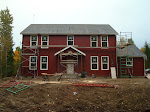
I look back now at all those posts I wrote when our well was getting drilled and just have to laugh at myself. I sure was having fun though. Our well and water system is overall doing fine, meaning we keep getting water whenever we open a tap. The taste of the water was overall just fine IMO, even though we were previously used to city tap water. My wife still prefers the water that goes through the refrigerator's builtin water filter.
After several months of living here however, I started to notice that:
1. We were getting some tan-colored scale buildup on several fixtures (not a lot, but definitely noticeable).
2. Toilet bowls were getting stained more quickly than we were used to.
3. When my wife used the bathtub in our master bath, the water showed a definite yellow-ish tinge, and left a ring after being drained (No I did NOT blame this on her...what you think I'm crazy??)
As it turns out one of my new neighbors owns a water filtration company (Clean Water Systems NW), so I asked him to come over and take a look. On his visit he checked out the ph of the water (fine), and did quick some iron and manganese tests using portable test equipment, and took away some samples for further testing. Bottom line after the results came in was that we had low-to-moderate hard water, plus some ferric iron, plus some manganese in our water.
He recommended a system that included:
1. A pre-filter for larger solids
2. An iron\manganese filter, with automatic backflushing, based on Pyrolox filter media.
3. A Scale Blaster for reducing hardness.
After my usual thorough (IMO) research, I decided to take his recommendations. The Scale Blaster product looked like snake oil at first, but they have a lot of testimonials to suggest otherwise; also a different neighbor has it installed with good results.
We did run into an issue on where to locate the iron\manganese filter. I didn't have room in the "mechanical alcove" in the garage, and I didn't want to lose any more floor space in the garage, so in the end I decided to put it up in the garage attic. (Before next winter I will need to insulate the piping a bit more to be safe, but I think it will be okay.)
The installation went smooth and easy. When the installer cut into the copper supply pipe (just downstream from the pressure tank), he showed me the inside of the pipe - wow was there a ton of sediment in there! Made me glad we decided to get this system - I don't want all of that dirt in our water, appliances, water heater, etc!
This is my garage attic, after fifteen months of living here:
After several months of living here however, I started to notice that:
1. We were getting some tan-colored scale buildup on several fixtures (not a lot, but definitely noticeable).
2. Toilet bowls were getting stained more quickly than we were used to.
3. When my wife used the bathtub in our master bath, the water showed a definite yellow-ish tinge, and left a ring after being drained (No I did NOT blame this on her...what you think I'm crazy??)
As it turns out one of my new neighbors owns a water filtration company (Clean Water Systems NW), so I asked him to come over and take a look. On his visit he checked out the ph of the water (fine), and did quick some iron and manganese tests using portable test equipment, and took away some samples for further testing. Bottom line after the results came in was that we had low-to-moderate hard water, plus some ferric iron, plus some manganese in our water.
He recommended a system that included:
1. A pre-filter for larger solids
2. An iron\manganese filter, with automatic backflushing, based on Pyrolox filter media.
3. A Scale Blaster for reducing hardness.
After my usual thorough (IMO) research, I decided to take his recommendations. The Scale Blaster product looked like snake oil at first, but they have a lot of testimonials to suggest otherwise; also a different neighbor has it installed with good results.
We did run into an issue on where to locate the iron\manganese filter. I didn't have room in the "mechanical alcove" in the garage, and I didn't want to lose any more floor space in the garage, so in the end I decided to put it up in the garage attic. (Before next winter I will need to insulate the piping a bit more to be safe, but I think it will be okay.)
The installation went smooth and easy. When the installer cut into the copper supply pipe (just downstream from the pressure tank), he showed me the inside of the pipe - wow was there a ton of sediment in there! Made me glad we decided to get this system - I don't want all of that dirt in our water, appliances, water heater, etc!
This is my garage attic, after fifteen months of living here:

I extended the lighting circuit to add the two new bulbs at the far end - huge improvement, it was such a cave before. Note, you can't see the new water system stuff in the above picture (it's behind the scaffolding supports). This isn't the best picture, but here it is:
 The oval-shaped white thing is an automatic water-shutoff valve, hooked up a sensor "puck" sitting below the equipment on the subfloor. The Scale Blaster is the white box screwed into the board underneath the rafters. The computer-looking thing above the blue filter bottle is what controls the periodic backflushing (once per week) to keep the filter media clean and efficient.
After a few weeks the system seems to be working well (just took a few days for the dark tinge from the new filter media to flush out, as the installer warned us). The taste of the raw tap water has improved according to my palate, but my wife is still sticking to the fridge water :). When we fill up the bathtub now, the water is much, much clearer. Those are subjective opinions of course, so I decided to get some independent testing done at Edge Analytical, the same place that tested our initial well water quality (for permit purposes). (I know that lots of folks never bother getting their water tested, but I prefer to be conservative when it comes to our water supply. Plus getting periodic testing will help me identify changes that occur over time.) I dropped off the samples this morning and will followup with another post to record the results.
Things I'd do differently next time:
1. Have a dedicated mechanical room for all of the water and HVAC stuff.
2. Install a water filter system during construction (or at least reserve space for it).
Things I'd do differently next time:
1. Have a dedicated mechanical room for all of the water and HVAC stuff.
2. Install a water filter system during construction (or at least reserve space for it).